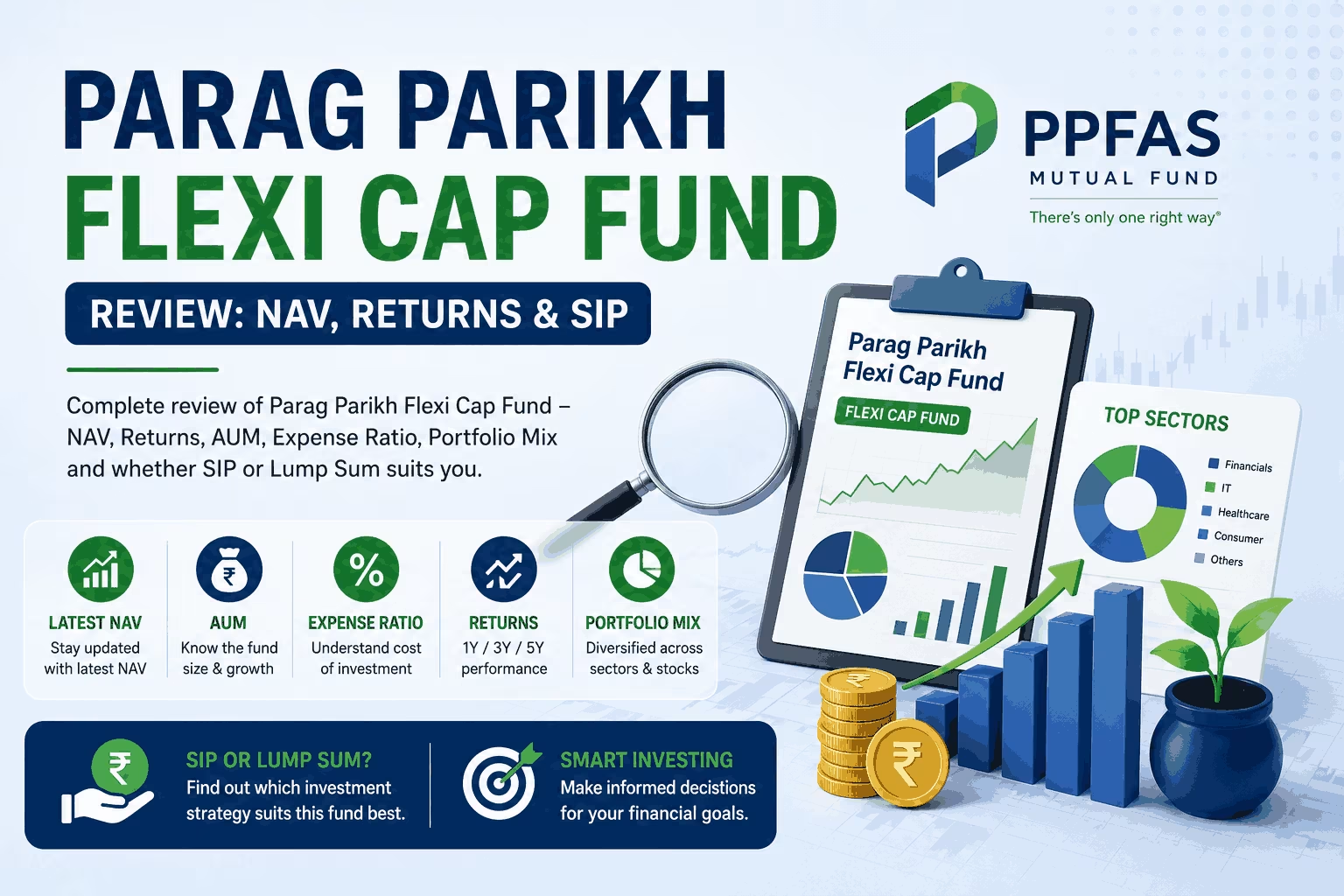
Parag Parikh Flexi Cap Fund, managed by PPFAS Mutual Fund, is one of the most widely tracked equity mutual funds among Indian retail investors, especially those investing through SIPs. Launched in May 2013, the fund became the first actively managed equity scheme in India to cross ₹1 lakh crore (₹1 trillion) in assets under management, a milestone it reached in 2025 after growing its AUM more than fivefold between June 2022 and June 2025.
As a Flexi Cap fund, it has the freedom to invest across large-cap, mid-cap, and small-cap companies without being restricted to a fixed market-cap allocation, and it is also known for holding a portion of its portfolio in overseas equities alongside Indian stocks. This review covers the fund's key details, historical performance, portfolio approach, and whether a SIP or lump sum route makes more sense if you're considering this fund.
Fund Details at a Glance
|
Fund Name |
Parag Parikh Flexi Cap Fund |
|---|---|
|
AMC |
PPFAS Mutual Fund |
|
Category |
Equity — Flexi Cap Fund |
|
Launch Date |
24 May 2013 |
|
NAV (Direct Growth) |
≈ ₹90.78 (as of 31 Aug 2026) |
|
AUM |
≈ ₹1,48,429 Crore |
|
Expense Ratio (Direct Plan) |
≈ 0.52% – 0.53% |
|
Benchmark |
Nifty 500 TRI |
|
Risk Level |
Very High (as per SEBI Riskometer) |
|
Minimum SIP / Lump Sum |
₹1,000 / ₹1,000 |
|
Exit Load |
2% if redeemed within 365 days; 1% if redeemed between 365–730 days (on units above 10% of investment) |
|
Fund Managers |
Rajeev Thakkar, Raunak Onkar, Raj Mehta, Rukun Tarachandani, Tejas Soman, Mansi Kariya, Aishwarya Dhar |
Note: NAV, AUM, and expense ratio figures change daily/quarterly. Always check the AMC's official website or a live tracking platform for the latest figures before investing.
Historical Performance
Parag Parikh Flexi Cap Fund has generally outperformed its Nifty 500 benchmark over longer three- and five-year periods, though like most equity funds it has seen short-term dips, including a mildly negative one-year return in 2026 after a strong 2025.
|
Period |
Fund Return (CAGR) |
Benchmark (Nifty 500) |
|---|---|---|
|
1 Year |
≈ -0.2% to -1.9% |
Varies by period |
|
3 Years |
≈ 14% – 14.7% CAGR |
Fund has outperformed |
|
5 Years |
≈ 12.5% – 13.5% CAGR |
Fund has outperformed |
|
Since Inception |
≈ 17.3% CAGR |
— |
Past performance does not guarantee future returns. These figures are indicative and sourced from public fund-tracking platforms as of late August 2026 — always verify current figures before making an investment decision.
Portfolio & Investment Strategy
As a Flexi Cap fund, Parag Parikh Flexi Cap Fund is required to invest at least 65% of its assets in equity and equity-related instruments, with the fund managers free to move across large-cap, mid-cap, and small-cap stocks based on where they see the best opportunities. The scheme's asset allocation typically leans heavily toward equities, with the remainder held in debt instruments and cash equivalents for liquidity.
A defining feature of this fund compared to most domestic flexi cap peers is its allocation to international equities, alongside Indian holdings across sectors such as financial services, technology, energy, and commodities. This blend of domestic and global exposure is part of why the fund has attracted a large and growing base of SIP investors over the past decade.
SIP or Lump Sum: Which Suits This Fund?
Given that Parag Parikh Flexi Cap Fund carries a Very High risk rating and invests across market caps and geographies, most financial planners suggest a SIP approach for this fund rather than a lump sum, particularly for first-time equity investors. A monthly SIP allows you to average your purchase cost across market cycles and reduces the risk of investing a large amount right before a market downturn.
That said, investors who already understand the fund's risk profile and have a long investment horizon (7–10 years or more) sometimes choose to deploy a lump sum during broader market corrections to take advantage of lower valuations. You can use a SIP vs Lump Sum Calculator to compare how both approaches could play out for a specific amount, rate assumption, and time period before deciding.
Who Should Consider This Fund?
• Investors with a long-term horizon of 5+ years who can tolerate equity market volatility
• Those looking for diversification across Indian and international equities within a single fund
• SIP investors who want a flexi cap fund with a long, consistent track record since 2013
• Investors who are comfortable with a Very High risk rating and do not need this money in the short term
This fund may not suit investors with a short investment horizon, those seeking capital protection, or investors uncomfortable with the fund's significant equity and international exposure.